

US-Thailand Reciprocal Tariffs: Trump Escalates Trade Stance, Shaking the Thai Economy
Introduction:
On July 8, 2025, Thailand received significant news. The U.S. announced a steep 36% tariff on Thai imports. This news sent ripples through Thailand’s export sector. This measure forms part of an escalated trade policy by President Donald Trump. It affects not only Thailand but also several other countries. The U.S. perceives these nations as having trade imbalances. Let’s delve into the background, impact, and what Thailand needs to prepare for regarding these US-Thailand Reciprocal Tariffs.
The Origin of “Reciprocal Tariffs” from the United States
The “Reciprocal Tariffs” measure reflects a long-standing policy of President Donald Trump. He aims to reduce the U.S. trade deficit with various trading partners. The U.S. believes many countries exploited the global trade system. This allowed their goods to enter the U.S. market with low or no tariffs. Meanwhile, U.S. goods faced high tariffs in those countries. Consequently, Trump announced retaliatory measures. These include increased import tariffs, which pressure trading partners to open their markets and lower import duties on U.S. goods.
Why Thailand is Affected by US-Thailand Reciprocal Tariffs?
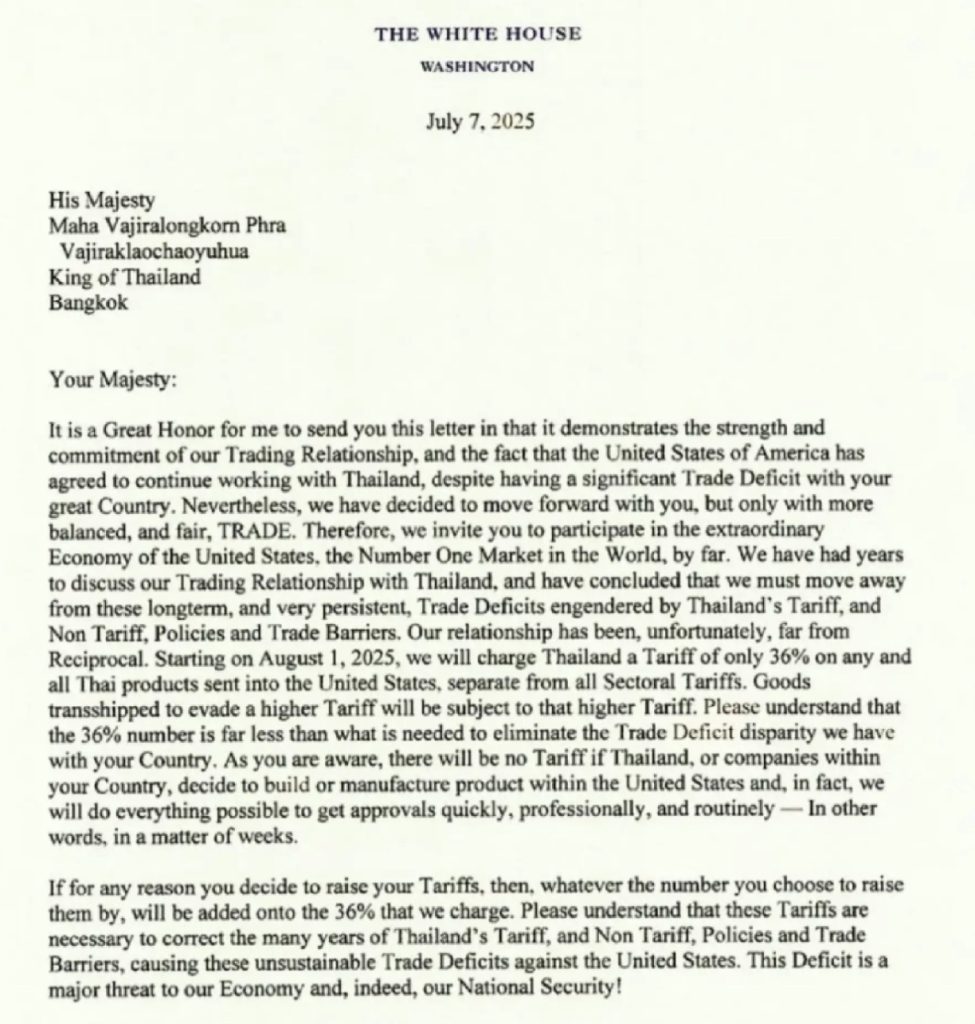
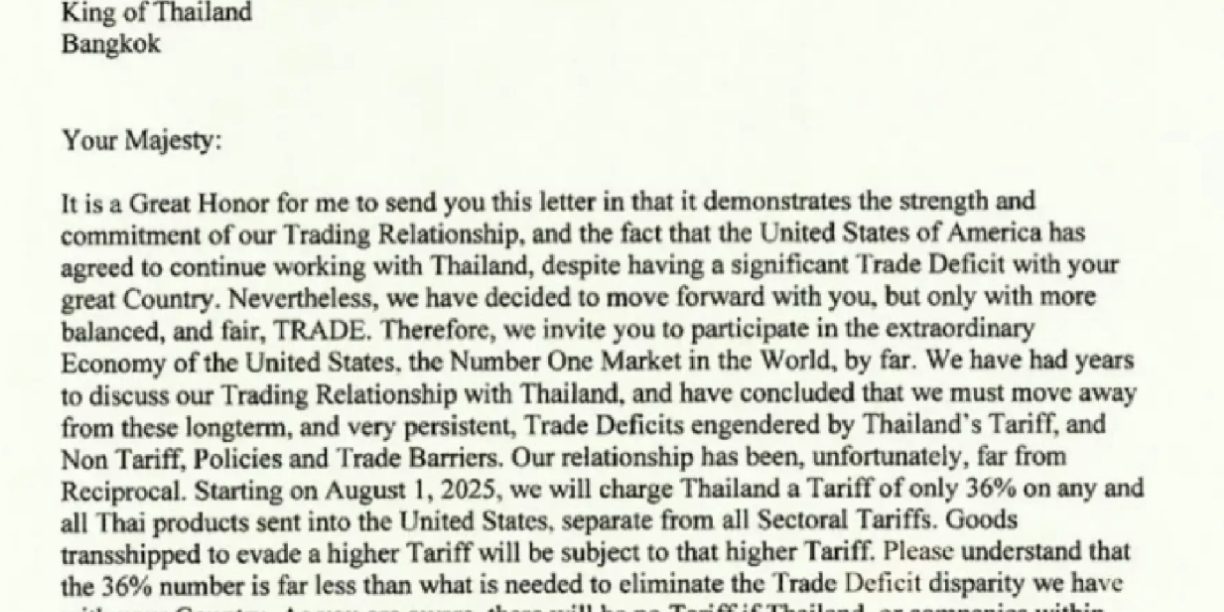
The U.S. states that Thailand has a “significant trade imbalance.” This means Thailand exports far more goods to the U.S. than it imports. This leads to a trade deficit for the United States. On July 7, Trump posted a letter on Truth Social. In it, he stated that the 36% reciprocal tariff would apply to “all types of Thai goods.” The U.S. would also tax goods transshipped through Thailand to avoid higher duties.
Impact on Thai Business and Economy
A high 36% import tariff will heavily burden Thai exporters. It will make Thai goods more expensive in the U.S. market. This will also reduce their competitiveness. Industries highly dependent on U.S. exports will feel direct effects. These include electronics, automotive parts, processed foods, textiles, and rubber. This situation could lead to:
- Decreased Exports: U.S. buyers may turn to goods from other countries with lower prices.
- Business Restructuring: Operators may need to adjust their strategy for production and marketing. Alternatively, they might consider relocating production bases.
- Reduced Employment: If the export sector slows down, it could impact domestic employment.
Other Countries Affected by U.S. Tariff Measures
This import tariff measure targets more than just Thailand. It also includes several other countries. The U.S. sees these nations as having trade imbalances, for example:
- Cambodia, Myanmar, and Laos: They face the highest tariffs at 40%.
- South Korea, Japan, Malaysia, Tunisia, Kazakhstan, Indonesia, South Africa, Bosnia and Herzegovina, Bangladesh, and Serbia: These countries face varying tariffs from 25% to 35%.
Solutions and Thailand’s Response
Trump offered a way for adjustment. He stated that if Thailand “opens its heretofore closed Trading Markets to the United States,” and “eliminates its Tariff, and Non Tariff, Policies and Trade Barriers,” the U.S. would review the measure. In the long term, balanced and fair trade negotiations are key to resolving this issue.
Conclusion:
The announcement of US-Thailand Reciprocal Tariffs poses a significant challenge for the Thai economy. Therefore, the government and private sectors must work closely. They need to find ways to cope and adapt to this changing situation. This includes negotiating, seeking new markets, and developing the competitiveness of Thai goods. These steps will help ensure the country’s economy grows sustainably.
References and Further Reading:
For the full story on US tariffs, read more at: The Nation Thailand
Explore Thailand’s economic trends in tourism in the article: Thailand’s 2025 Tourism Outlook