

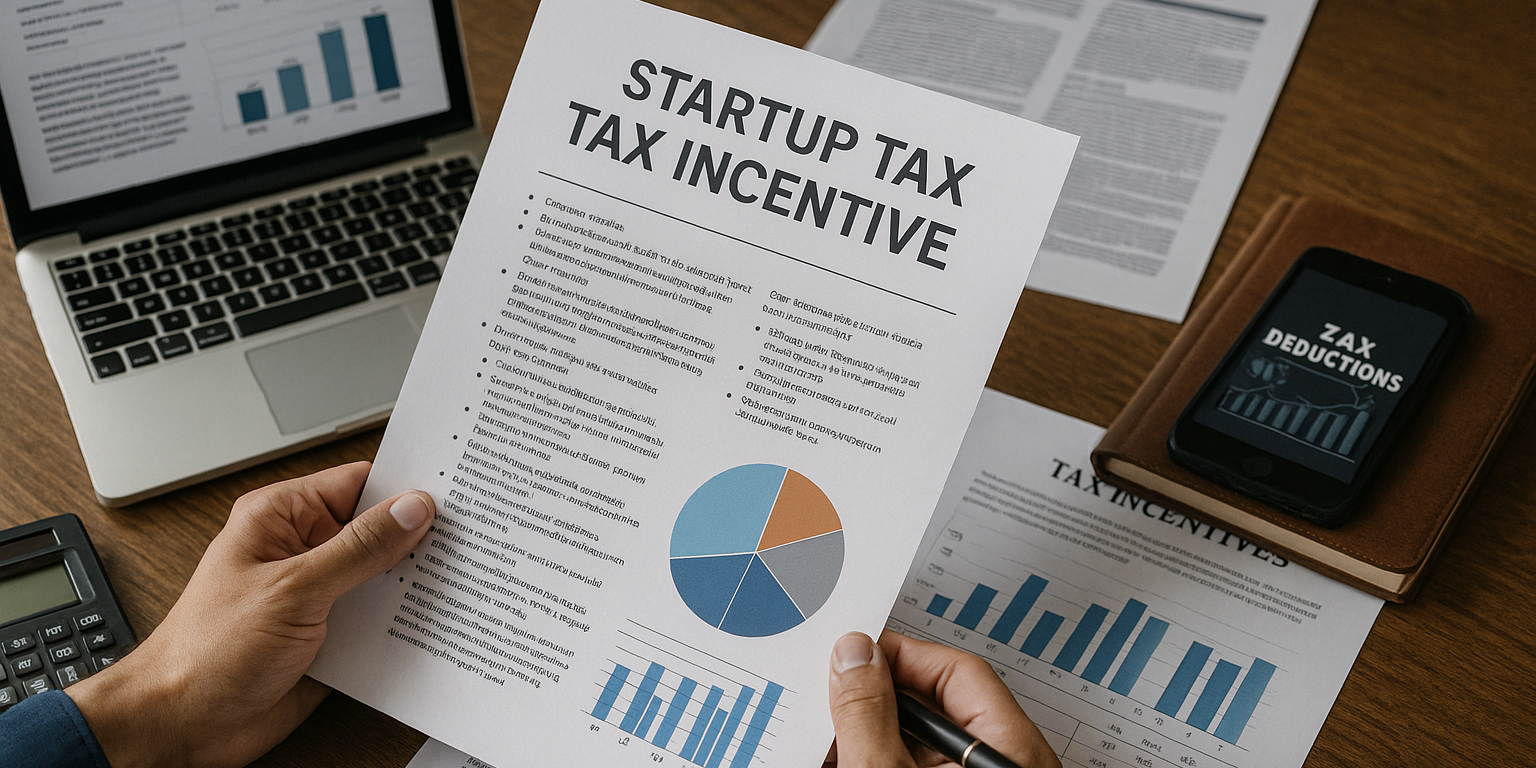
Startup Tax Incentive in Thailand: A Practical Guide for Founders
For many founders, tax is the last thing they want to think about. But using the right startup tax incentives can dramatically reduce costs in the first few years and free up cash for growth. This guide explains the key incentives available in Thailand and how to use them in practice.
If you want a professional team to handle your books and tax planning from day one, you can work with specialists in startup accounting and tax compliance in Thailand .
1. What Is a Startup Tax Incentive?
A startup tax incentive is a government measure that reduces or exempts certain taxes for new, innovative, or technology-driven businesses. The goal is simple: help startups lower their tax burden in the early stage so they can reinvest more money into product, people, and growth instead of paying tax too early.
2. Main Types of Tax Incentives for Startups
2.1 Corporate Income Tax Exemption (BOI)
Technology and innovation-based businesses may qualify for tax holidays under the Board of Investment (BOI). Depending on the activity, a startup may receive:
- Corporate income tax exemption for 3–8 years
- Exemption or reduction of import duties on machinery and equipment
- Non-tax incentives such as work permits and visa support for foreign experts
To benefit from BOI, your company must maintain proper bookkeeping and separate accounts for BOI and non-BOI activities. Working with a firm like Bookkeeping.co.th helps ensure that your records and tax filings match BOI requirements.
2.2 Super Deduction (200% or Enhanced Deduction)
Certain expenses that support digital transformation, innovation, or R&D may be eligible for an enhanced deduction (sometimes up to 200%) in the tax return. Common examples include:
- Training costs for digital and technology skills
- Software, cloud systems, and IT infrastructure used in the business
- R&D expenses, including salaries of qualified R&D staff
- Cybersecurity and data protection systems
The key is documentation: official tax invoices, clear descriptions, and correct accounting treatment are critical if the Revenue Department reviews your claim.
2.3 Incentives for Angel Investors
In some cases, individual investors (angel investors) who invest in certified startups may be allowed a personal income tax deduction equal to a percentage of the amount invested, subject to holding period and other conditions.
This creates a win–win structure: the startup receives capital, while the investor gains tax benefits. Founders should clearly document share subscriptions, shareholder agreements, and capitalization tables.
2.4 Reduced Withholding Tax on Certain Services
For service businesses that export services or qualify under specific rules, the withholding tax (WHT) rate applied by clients may be reduced (e.g. from 3% down to 1–2%). This directly improves monthly cashflow because less tax is withheld upfront.
2.5 Import Duty Exemptions on Machinery and Hardware
Hardware-heavy startups such as robotics, biotech, or food-tech may qualify for:
- 0% import duty on approved machinery
- Tax incentives on related R&D and pilot plant activities
These incentives often go through BOI or specific investment promotion schemes.
3. Which Startups Typically Qualify?
While the detailed rules depend on the exact scheme, Thai startup tax incentives often focus on companies that:
- Are newly incorporated (e.g. within the last 3–5 years)
- Meet SME criteria on paid-up capital and annual revenue
- Operate in tech, digital, or innovation sectors, or use innovative processes
- Have proper accounting records and tax filings
Poor documentation, cash-only transactions, and missing tax invoices are common reasons why startups fail to receive or later lose their incentives.
4. Practical Steps to Claim Startup Tax Incentives
- Review your business model. Map your activities to existing incentive schemes (BOI, digital, R&D, SME).
- Set up clean accounting from day one. Use a proper accounting system and a professional firm experienced with Company PromptPay and e-tax workflows .
- Gather supporting documents. Contracts, invoices, payroll records, R&D reports, and technology documentation.
- Apply for BOI or relevant schemes. Prepare applications, projections, and supporting documents clearly and consistently.
- File tax returns correctly. Reflect exemptions and deductions in your PND and PND.50/51 filings, with clear notes.
- Maintain records for audits. Keep digital and paper copies ready in case of a Revenue Department review.
5. Example of a Simple Tax Planning Timeline
A typical high-level plan for a tech startup in Thailand might look like this:
- Year 1–2: Focus on super deduction for software, training, and systems.
- Year 2–4: Secure BOI promotion for core activities to enjoy tax holidays.
- Year 3–5: Bring in angel investors who may also enjoy tax benefits.
- Ongoing: Use e-Withholding Tax, e-Receipt, and Company PromptPay to reduce admin costs and improve cashflow.
6. Common Pitfalls Startups Should Avoid
- Claiming incentives without proper supporting documents
- Using non-tax invoices or unregistered suppliers for major expenses
- Filing financial statements and tax returns late
- Not separating BOI and non-BOI accounts when required
- Ignoring tax impact when restructuring shareholding or fundraising
7. Why Work With a Professional Accounting Firm?
Startup founders should focus on product, market fit, and fundraising — not on decoding every tax rule by themselves. A professional firm that understands Thai GAAP, tax law, BOI, and SME incentives can:
- Design a tax structure that fits your business model
- Set up monthly bookkeeping, payroll, VAT, and withholding tax correctly
- Prepare financial statements and support tax audits efficiently
- Ensure you actually receive and keep the incentives you are entitled to
If you need hands-on support, you can contact a team specializing in accounting, tax, and payroll services for startups in Thailand .
8. Connect With Us
Want to stay updated on practical tax tips for startups and SMEs in Thailand? Follow our updates on Facebook:
follow Bookkeeping on Facebook for news, checklists, and real-life case studies about tax incentives and compliance.
Frequently Asked Questions: Startup Tax Incentive in Thailand
1) What is a startup tax incentive in Thailand?
A startup tax incentive is a government measure that reduces or exempts certain taxes for new, innovative, or technology-based companies. The aim is to help founders lower their early-stage tax burden so they can reinvest more cash into product, hiring, and market expansion instead of paying full tax from day one.
2) Who can qualify for startup tax incentives?
In general, a company may qualify if it is newly incorporated, meets SME criteria on paid-up capital and revenue, operates in tech/innovation or uses advanced processes, and maintains proper bookkeeping and tax filings. Each scheme has its own rules, so it is important to review the details with a professional advisor.
3) What are the main types of startup tax incentives in Thailand?
Common startup tax incentive schemes include:
- Corporate income tax exemption under BOI promotion
- Super deduction (e.g. 200%) for digital transformation, training, or R&D costs
- Personal income tax benefits for angel investors in certified startups
- Reduced withholding tax rates on qualifying service income
- Import duty exemptions on approved machinery and equipment
4) How do I apply for BOI or other startup tax incentive schemes?
The usual process is to prepare a clear business plan, financial projections, and supporting documents (contracts, technology descriptions, hiring plans, etc.), then submit them to the relevant agency such as the Board of Investment (BOI). Once approved, the company must follow the conditions closely and reflect the incentives correctly in its tax r