


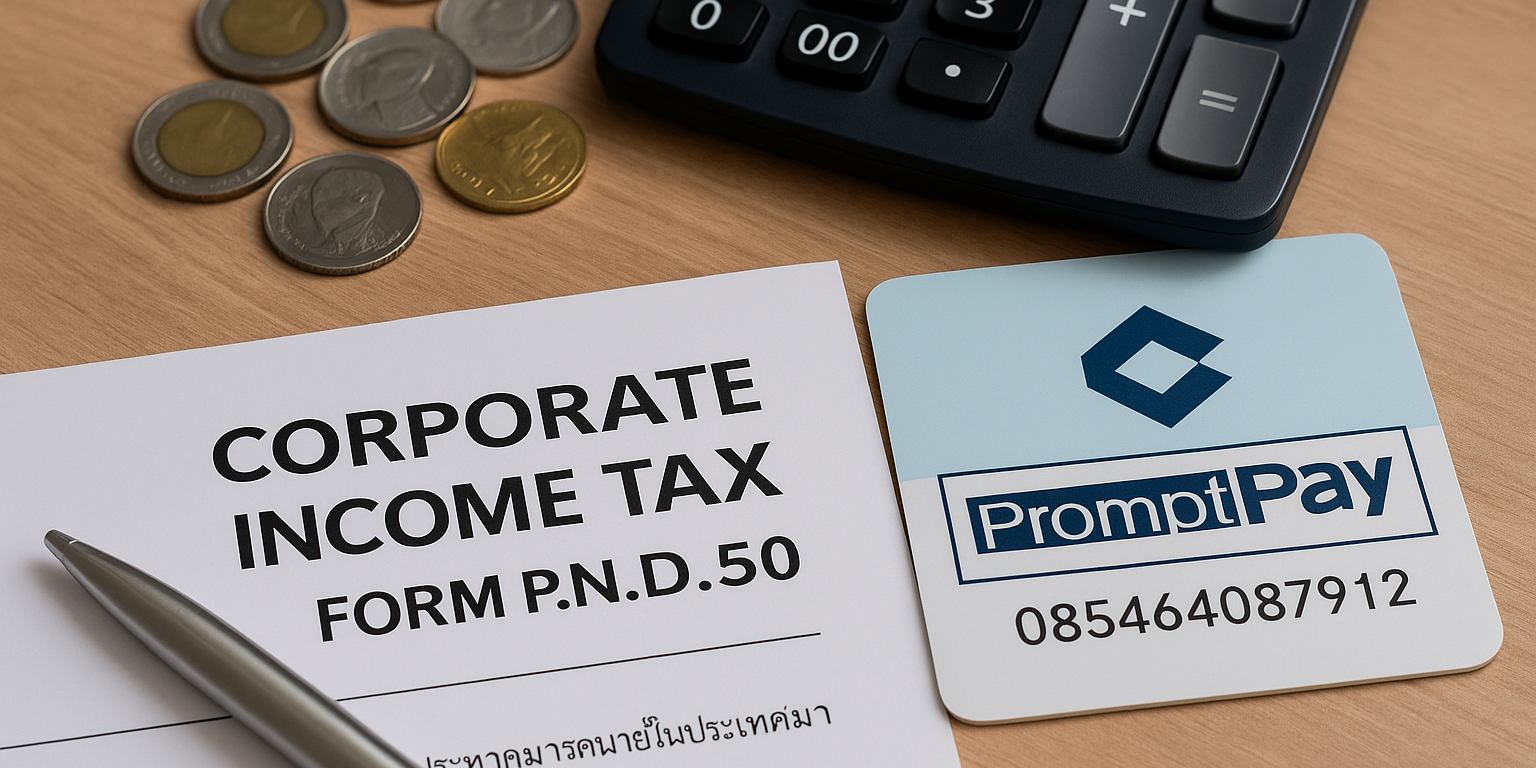
Have You Linked Your Company PromptPay Account to Your 13-Digit Corporate Tax ID Yet?
Tax Tip from Bookkeeping.co.th — Practical Tax Guide for Thai SMEs
What Is Company PromptPay and Why It Matters
Company PromptPay is the corporate version of Thailand’s PromptPay system. Instead of using a citizen ID or mobile number, a company links its 13-digit corporate Tax ID to its business bank account. This allows government agencies, including the Revenue Department, to transfer funds such as tax refunds directly into the company’s bank account.
For SMEs, Company PromptPay is much more than a convenience tool. It is a critical component of Thailand’s ongoing shift toward e-Tax, e-Refunds, and digital-first financial operations.
How Company PromptPay Improves the Tax Refund Process
Traditionally, tax refunds were issued via cheque or manual bank processes, which involved:
- Delays in postal delivery or cheque clearing
- Risk of lost cheques or incorrect delivery
- Administrative mismatches when company information changed
With Company PromptPay, the process becomes simpler and far more reliable:
- Your company files the PND.50 tax return.
- The Revenue Department verifies the information.
- The tax refund is transferred electronically using the company’s 13-digit Tax ID.
This ensures accuracy, faster processing, and fewer administrative errors.
Requirements for Companies Using Company PromptPay
To receive a tax refund through Company PromptPay, businesses should:
- File the latest PND.50 (for example, FY2024)
- Ensure the refund request matches the registered company name
- Register a Company PromptPay account linked to the 13-digit Tax ID
- Pass the Revenue Department’s basic compliance and risk checks
These requirements support a secure and efficient refund process.
How to Register for Company PromptPay
Registration is done directly with your company’s bank. You will typically need the following documents:
- Bank’s Company PromptPay registration form
- Company affidavit (issued within 6 months)
- Copy of the company’s authorized director’s ID card
- Power of attorney (if a representative submits the request)
- Copy of the attorney-in-fact’s ID card
Once approved, the bank links your Tax ID to your corporate account, enabling electronic refunds.
Key Benefits for SMEs
PromptPay offers practical advantages for any business:
- Faster refunds with direct bank transfer
- Lower risk compared to cheque processing
- Improved cash flow for day-to-day operations
- Better documentation and automated record-keeping
- Alignment with Thailand’s e-Tax ecosystem
Common Issues to Watch Out For
- Mismatched Tax ID between the bank and Revenue Department
- Outdated company affidavit or director information
- Incorrect bank records after shareholder or signatory changes
- No internal process for monitoring refunds and reconciliation
A quick internal check before registration can prevent delays.
The Role of Professional Advisors
Many SMEs choose to work with accounting and tax advisors who understand Thailand’s regulatory requirements. For example:
Bookkeeping.co.th provides integrated bookkeeping, tax compliance, and corporate services to help companies prepare, register, and manage Company PromptPay correctly from day one.
For companies employing foreign directors or expatriate staff, work permit and visa structure must also align with tax compliance. A dedicated advisor such as WorkPermit.co.th can ensure that immigration, employment, and tax obligations all move in the same direction.
Staying Updated on Policy Changes
While certain periods may highlight campaign timelines or refund processing cycles, the most important long-term principle is this: registering PromptPay early ensures a smoother tax refund experience.
Companies should monitor updates from:
- The Thai Revenue Department
- Their commercial bank
- Their accounting / tax advisory firm
Frequently Asked Questions (FAQ): Company PromptPay
1) What is Company PromptPay?
Company PromptPay is a system that links a company’s 13-digit Corporate Tax ID to its bank account, enabling faster and secure electronic transfers including tax refunds from the Revenue Department.
2) Why should companies link PromptPay to the Corporate Tax ID?
It speeds up tax-refund transfers, minimizes administrative errors, removes the risk of lost cheques, and aligns business operations with Thailand’s e-Tax and digital financial systems.
3) What documents are required to register PromptPay?
You will need the bank’s registration form, a company affidavit (within 6 months), the authorized director’s ID copy, and a power of attorney if someone files on behalf of the company.
4) Where does a company register PromptPay?
Registration is done at your company’s bank branch. Once verified, the bank links the 13-digit Corporate Tax ID to your corporate bank account.
5) How long does it take to receive a tax refund via PromptPay?
In most cases, refunds are transferred within a few business days after approval, significantly faster than cheque processing.
6) Are foreign-owned companies eligible for PromptPay?
Yes. Foreign-owned companies can register normally, but should ensure corporate documents, director identity, and banking information are fully consistent and updated.
7) Can a company still receive refunds if it has not registered PromptPay?
Yes, but refunds will take longer and may require manual processes such as physical cheques or additional verification.
8) What happens if the company’s Tax ID or director information changes?
The company must update its information at the bank, the DBD, and the Revenue Department to ensure PromptPay remains valid.
9) What are the benefits of PromptPay for refund reconciliation?
Refunds can be reconciled easily with accounting records due to clear transaction trails, improving audit readiness and monthly/annual closing accuracy.
10) Can professional advisors help manage Company PromptPay registration?
Yes. Accounting and tax advisors can coordinate documents, prepare applications, align accounting records, and ensure the setup matches Revenue Department requirements.